I met Dr. Giovanni Martinez in Fiji as part of the Aloha Award annual trip, where finalists like him and judges like me get together for a week of connection and restoration, courtesy of generous sponsorship from Namotu, Waterways, and Mark Hartman, founder of the award.
Over the week we spent as roommates, I got to see one of the hardest working people in surfing up close and personal. We shared stories of our upbringings and surfing lives and, more importantly, stories of the work he does for children with special needs through his nonprofit in Puerto Rico, SURF4DEM. Giovanni was a runner-up for the 2025 Aloha Award — and after hearing his story, it's easy to understand why.
In His Own Words: Dr. Giovanni Martinez
SURF4DEM was created 14 years ago. I drew inspiration from my brother, who has a genetic condition called Down Syndrome. It was a struggle for my family at first, but there were kind souls along the way who helped make it easier. I knew firsthand the difficulties families face day to day. This is what inspired me to pursue a PhD in clinical psychology in order to help kids with their development.
Once I had my PhD, I wanted to do surf-based research — but they wouldn't let me. Even though Puerto Rico is beautiful, surfing wasn't viewed well in academic or clinical circles. There was a lot of resistance. You want to take these kids on the water? I knew the power of the ocean, so I took a big risk — with my license, to be honest — to create a unique pilot study and start the research. To prove to my country that we had something to share, that special needs kids could benefit greatly from the power of the ocean.
At the time, around 2013, there was little to no research locally or globally supporting surf therapy as an intervention for children with autism. Some could not fully understand how the ocean could be integrated into a therapeutic model, while others doubted whether children on the autism spectrum could safely participate in such an environment. The absence of data made it difficult to gain trust, funding, and institutional support. Despite this, I remained committed to the vision. I saw something others didn't yet see — that the ocean could become a powerful therapeutic space when approached with structure, intention, and clinical knowledge.
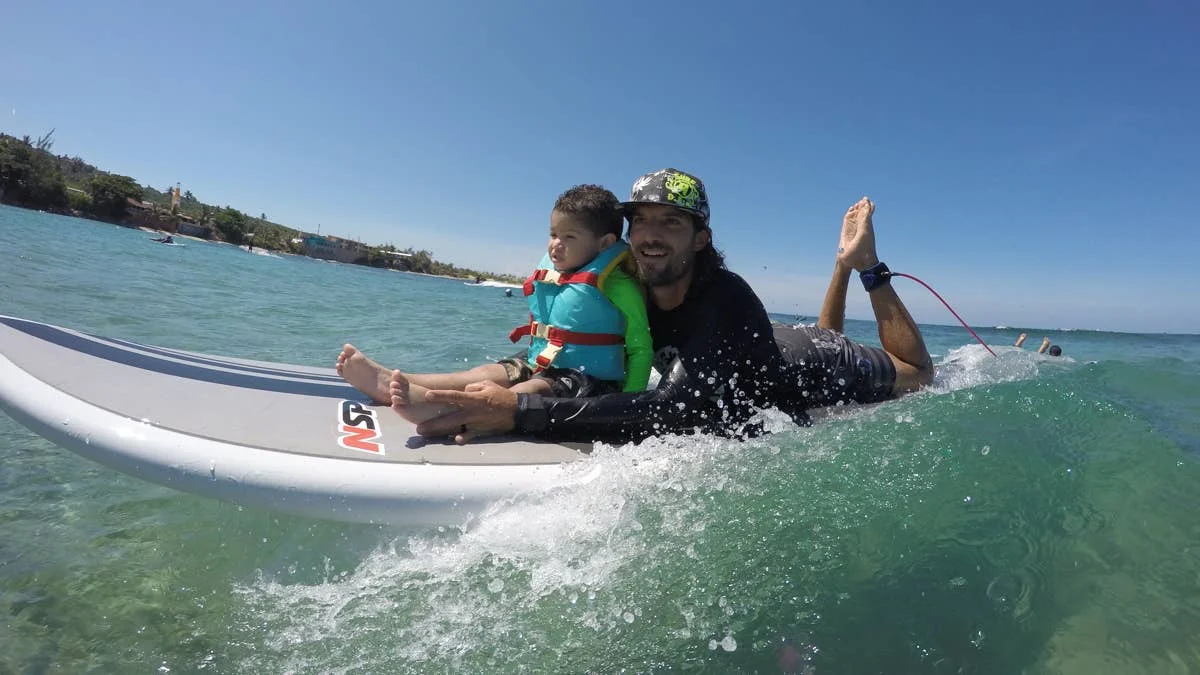
SURF4DEM
Within one year of that study, we had ten kids. Some began verbalizing. Muscular tone improved. Relations at school improved. Everything got better across the board. That gave me all the information I needed to start a nonprofit in 2013. We went for it — no salaries, just pure passion. It was powerful. Parents could feel the vibrations from everyone, two times a week, Thursday and Saturday.
Things kept getting better and we started to receive more and more attention from the community and the media. All of a sudden, once it was established as a success, everyone's like — I'm so proud of you! I knew you could do it! But that was only after we made a huge effort and took on a lot of risk.
The community around SURF4DEM has been incredible. One particularly powerful story came years ago, when one of our students — after losing both parents — was actually adopted by another family in the program. That was huge. It's not often that families will volunteer to take on a child with special needs.
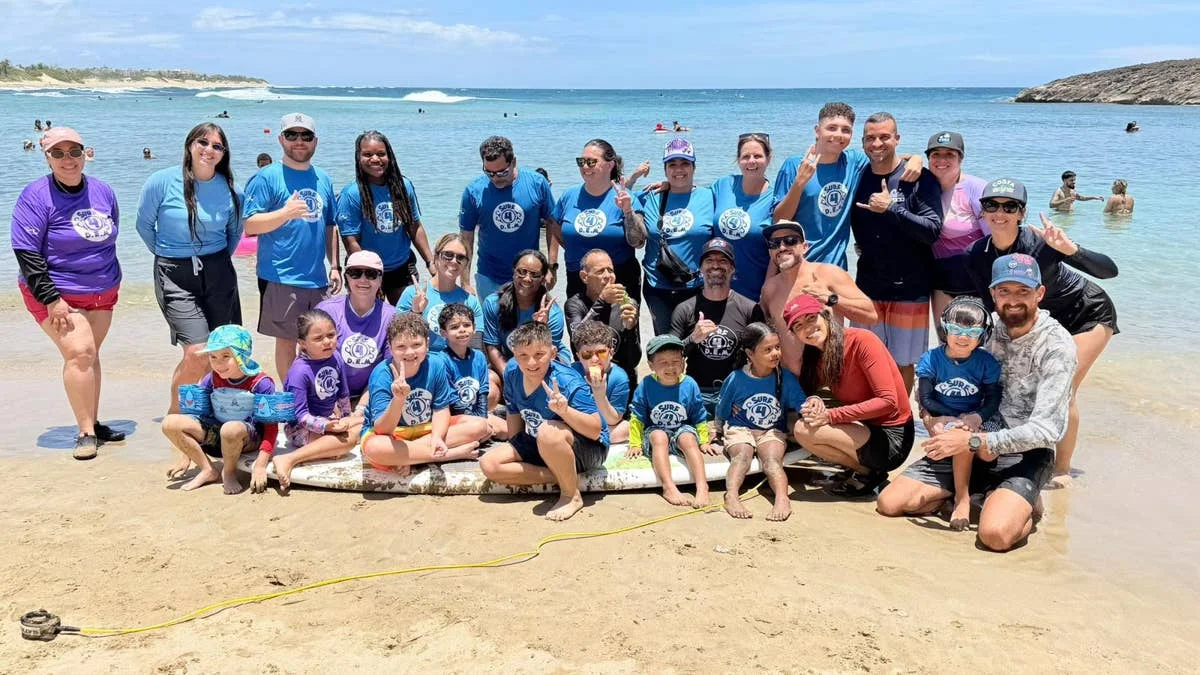
SURF4DEM
Being recognized — including as a finalist for the Aloha Award — is deeply meaningful. It validates over a decade of dedication, resilience, and belief in this work. However, the most important recognition comes from the families and the community we serve. Watching the progress of the children is the greatest reward I could ever receive. Seeing them grow — improving in communication, emotional regulation, confidence, and connection — fills me with a profound sense of purpose.
At SURF4DEM, we have created more than just a program. We have created a safe space. A space where children can experience joy, freedom, and growth simultaneously. For many of them, it is one of the few environments where therapy does not feel like therapy — it feels like life, like play, like possibility.
SURF4DEM, in Spanish, means to surf for the development of emotional and motor skills. We primarily talk about autism because that was the focus of the study, but we take everyone in need — ADHD, genetic disorders, physical disabilities. The concept of "blue mind" is very real. The ocean has a unique ability to regulate, calm, and stimulate the human nervous system. Saltwater is filled with negative ions that help lower anxiety in kids and help them start to socialize, which is normally a huge challenge. When children with autism are introduced to the ocean and surfing in a structured, safe, and professional way, the changes can be remarkable.
Surf therapy is not just an activity — it is an experience that integrates the body, mind, and environment. The ocean heals, but it also activates. It provides sensory input, promotes motor coordination, encourages presence, and fosters emotional connection. It meets each child where they are, without judgment. And when done correctly, it can open doors to progress that traditional settings sometimes cannot reach.
We started to get calls from directors of schools asking, "What are you doing?" Surfing. We would have to explain it again and again. But it's working.
We have two components: big events, like other organizations. And also free clinical sessions every week. We're very proud to offer that because it comes from the heart — not because of money or anything else, but because we know we're helping improve the lives of kids and their families.
Surf Therapy Resources for Families
SURF4DEM is one of a growing number of organizations around the world using the ocean as a vehicle for healing. If you or someone you know has a child who might benefit, here are some programs worth exploring:
SURF4DEM — Jobos Beach, Isabela, Puerto Rico. Free clinical sessions for children with autism, ADHD, genetic disorders, and physical disabilities.
Surfers Healing — National (USA). One of the most established surf therapy organizations in the country, focused on children with autism.
International Surf Therapy Organization — Global network connecting surf therapy providers, researchers, and advocates worldwide.
WAVES4ALL — Oceanside, CA. Adaptive surf therapy for children and adults with a range of physical and developmental challenges.
SEA Academy — La Jolla, CA. Ocean-based education and therapy programs for youth with special needs.
Aces Surf — Hawaii. Adaptive surfing and ocean therapy for individuals with disabilities.
Gnome Surf — Rhode Island. Surf therapy and adaptive surfing for children and adults with disabilities.
Challenge Athletes Foundation — San Diego, CA. Grants and programs connecting athletes with physical challenges to the sports they love, including surfing.
The Wave Project at The Wave Bristol — Bristol, UK. Free six-week surf therapy courses for young people aged 8–21 dealing with mental health challenges, autism, trauma, and adaptive needs — held at The Wave, Europe's first inland surf resort.
Related: Pure Stoke at Queens: The 2026 Hawai‘i Adaptive Surfing Championships