I’ve always been a runner. In middle school, I briefly considered playing soccer. My track coach was the one to encourage me to try out for the team because I was really fast. I got kicked in the shin one time, and that’s all it took to confirm that soccer was not the right sport for me. I preferred running.
I was a sprinter, and I was always tall, so my events in middle and high school were the 100-meter hurdles, 300-meter hurdles, and high jump. After graduation, I went to Florida State University, but I didn’t try out for the track team, which I regret. I think some of the running I do now is my way of living out that collegiate running dream.
I really didn’t get back into running until 2014—I basically took a 12-year hiatus—when I was preparing for my wedding. I just wanted to look and feel my best on the big day, but I ended up falling back in love with the sport I’d grown up with.
I started running more and hopping into 5K and 10K races. I’d usually sign up for the Gate River Run, a 15K in Jacksonville, Florida, every year. That was the longest race I’d ever done until recently.
How I Got the Idea to Run a Marathon
My transition to marathon running happened sort of unexpectedly. Two years ago, I moved from Florida, where I’d lived my entire life, to Houston, Texas, with my husband, our three kids, and my mom, who had just been diagnosed with her second form of cancer.
Between the move, managing my mother’s care, being a mom of three, and working full-time as a physical therapist and rehab services manager, I had a lot weighing on me. I remember going out for a run just to clear my head, and by the time I looked down at my watch, I’d run seven miles, which was a lot farther than normal. Surprisingly, I hadn’t hated it. I felt good.
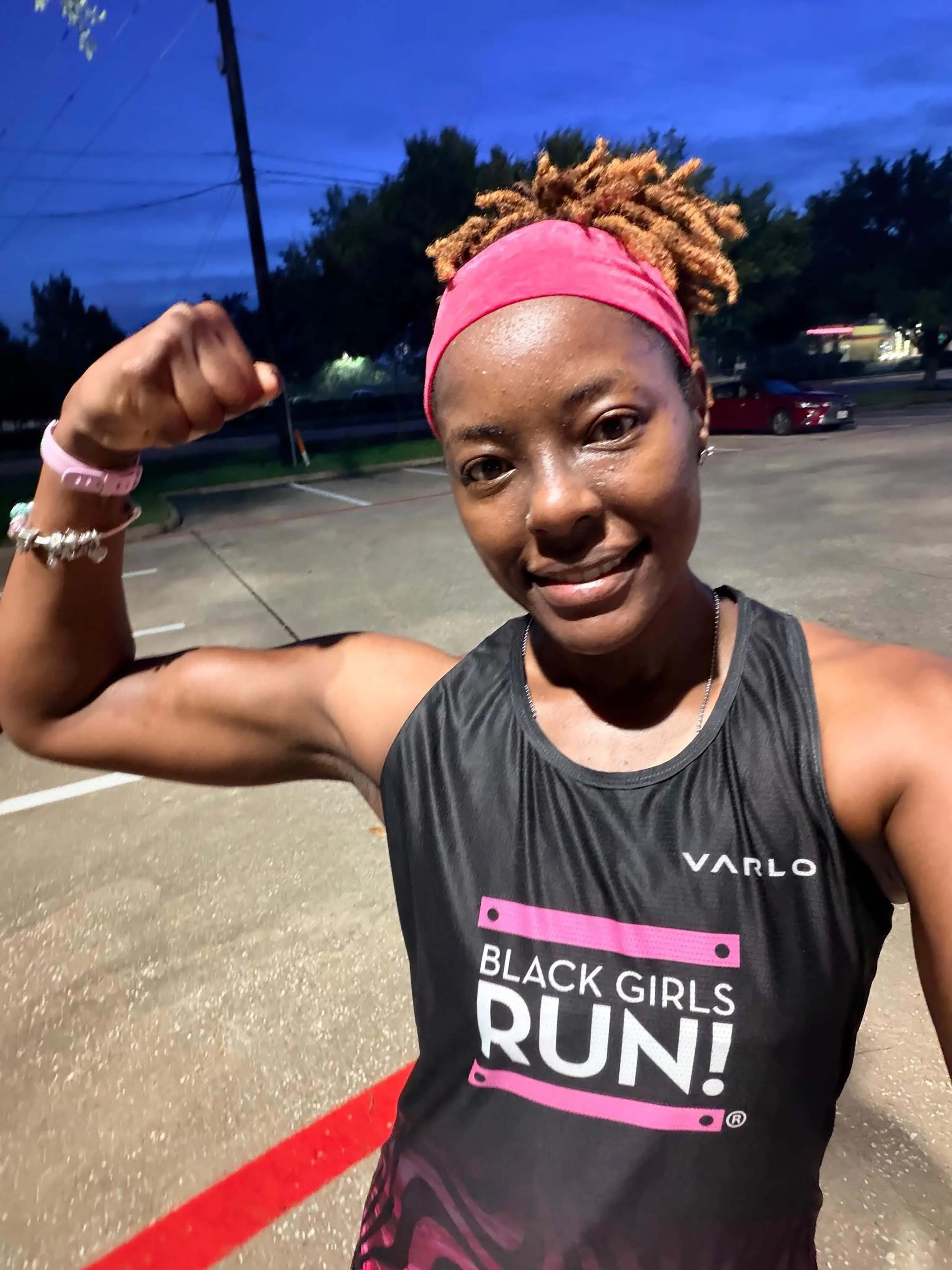
I joined the local chapter of Black Girls Run, an organization that focuses on improving awareness of the health benefits of running in the African American community, and showing Black women that there’s a place for us in the sport. (We are open to all women, regardless of race, but we were initially founded for Black women.) They host group runs in my neighborhood, so I figured it was a good way to meet people, make friends, and get some support running in a big city that was still very new to me.
I quickly found out that almost every lady in that group is a marathoner. And before long, they were all telling me I had to register for the Chevron Houston Marathon, which they’d all run and described as life-changing.
I hadn’t ever considered running a marathon. Before meeting these women, I didn’t personally know anyone who ran marathons. But they were so supportive and really encouraged me to challenge myself. So I signed up for the 2026 Chevron Houston Marathon.
What My Marathon Prep Looked Like
To get some basic training information, I read Marathon: The Ultimate Training Guide by Hal Higdon; whenever I’m new to something, I turn to the literature. From there, I used the Nike Run app to create a custom training plan. I knew I could realistically commit to running three days a week, and I wanted my long run to be on Saturday. I reserved Sunday for rest and planned to do three strength-training sessions a week, sometimes in the early afternoon after a morning run.
Strength training is something I believe in. Runners who don’t strength train are more prone to injuries, and if you want to improve your power and speed, it’s absolutely necessary. I don’t have hours and hours to spend at the gym, so I’d typically lift for 30 to 45 minutes in my garage using my adjustable Bowflex weights and a bench. I started by alternating between upper-body, lower-body, and full-body workouts, but I found that I felt stronger on the days I was doing full-body workouts. So, I switched to mostly compound exercises that engage multiple muscle groups.
Even though I had a manageable plan, I was not fully prepared for how time-consuming marathon training would be. I had to get very creative with time management. Thankfully, I had the full support of my husband Brian.
On Saturdays, I’d wake up early to do my long runs—5 a.m. at first, and then eventually 4 a.m.—and he would get up with the kids, make them breakfast, and get them dressed for soccer. (Even though I opted out after that one kick to the shin, all three of my kids play.) I’d get back to the house with just enough time to shower and head out the door with them.
Other days, I found myself squeezing in runs and workouts whenever I could. My mother’s chemo treatments could take up to eight hours. So there were some days I’d bring her in, get her settled, and go out for a one-hour run, knowing the nurses would call me if they needed me to come back. One Christmas morning, I managed to get up and finish a long run before Santa came. I felt like I won the mom-runner award.
The day before the marathon, I ran the We Are Houston 5K as a shakeout run. But the energy was so electric that I ended up getting a PR of 28:16. I woke up the next morning feeling really motivated for the race ahead. When I arrived at the convention center, I was a little overwhelmed by the thousands of runners, but then I found my group of running friends from Black Girls Run. There were eight of us there, all in matching outfits.
The excitement of the starting line got to me, and I went out way too fast. (I ran my first mile in about nine minutes, but by the end I was closer to an 11:30 pace.) But the crowd gives you so much energy—and food! People were handing out mini hot dogs, doughnut holes, Nerds clusters, and cups of beer. I saw so many fun signs and people in costume. I stopped to take a picture with a lady dressed like a unicorn, and that’s where I saw my family. My husband had brought the kids and my mom to cheer me on. My daughter said, “Mommy, I picked the spot by the unicorn lady because I knew you wouldn’t miss her.”
I felt really great until around mile 20 when my leg started cramping up. I’d been steadily hydrating and fueling every 45 minutes, but I think I may have missed a gel. I stopped at the medical tent, rubbed some Biofreeze on my leg, and got back in the race.
I think the last 5K of the race is where marathoners are made. You’re almost there, but you’re not. You think about walking. You think about giving up. That’s where mental toughness comes into play.
Crossing that finish line was a moment I’ll never forget. I cried, just like everyone else. My ultimate goal had been to complete the marathon, but I’d also set a time-based goal of finishing in under five hours. My official race time was 5:02:17. But according to my Strava, I ran the race in 4:58, so I tend to go with that. According to my race data, I actually ran over 27 miles. Next time I’ll avoid weaving through the crowd, because those extra steps add up.
What I Learned About Race Day
Running the marathon was one of the hardest experiences of my life, but now I feel unstoppable. I feel like I can do anything and overcome any challenge. And, I’m officially all in on running marathons. My goal is to run all the World Majors, starting with the Chicago Marathon in the fall. As part of my training, I’m raising money and awareness for the American Cancer Society in honor of my parents.
For Chicago, I’m doing a few things differently. After doing some research, I decided I need to increase my weekly mileage in order to improve my pace. So, I’m going to run five days a week instead of three. I’m also using the Endorphins Running training app, which generates customized training plans and gives audible pacing cues while you run. Having that voice in my ear keeps me from running too fast when I should be sticking to an easy, sustainable pace.
I’ll also be switching from training in a hydration vest, which Chicago doesn’t allow, to wearing a hydration belt. I plan to be really diligent with taking gels every 45 minutes, no matter what. And I may take salt tabs earlier than I did during Chevron.
On race day, my outfit will be completely different. In January, we had really cold weather on race day, so I totally overdressed and felt really bogged down by my layers. For Chicago, I plan to get a throwaway jacket, which the race will collect and donate along with everything else the runners discard, and just wear shorts and a tank top.
I also plan to bring my community along for the ride. I regularly post inspirational messages and exercise videos on my Facebook, Instagram, and TikTok accounts. I like to show other people that, even though I’m a busy mom and I have a demanding job, I find time to prioritize my health and fitness.
In addition to being a member of Black Girls Run, I’ve recently become an ambassador for my local chapter. This means I show up early to our events and monthly group runs, answer questions, and encourage prospective members to become a part of the organization. I’m constantly inviting women I see running by themselves to join us. I tell them we have a whole group of supportive women who will motivate them and keep them safe, no matter where they are in their fitness journey.
3 Tips for First-Time Marathoners
Join a Running Group
When you join a group, you get the support and knowledge of a community. I’m a firm believer in not reinventing the wheel. Other people have trained for the races you want to run, and they can give you tips on everything from gear to training to hydration.
You’re also safer when you run with a group. With Black Girls Run, we wait for everyone to finish, including walkers. No one is left behind. And there’s always at least one person in the group who is CPR-certified.
Rest and Modify Your Training as Needed
It’s okay to take an unplanned rest day when you need it or cut back on your mileage if you’re feeling pain or managing an injury. There were days when my plan said 10 miles, but I only did 6, or I ran at a slower pace because that’s what felt right for my body that day.
In fact, early in my training, I found out that I tore my meniscus. Working with a physical therapist, I significantly modified my plan. I backed off my mileage and did a lot more biking. I focused on open-chain exercises, where your leg can move freely, rather than closed-chain exercises, where the foot is on a stationary surface, like the floor.
Luckily, my treatment was effective, and I was able to get back to running within a few weeks. But I could have done a lot more damage if I had just pushed through the pain.
Wear a Cute Outfit
My personal research shows that when you wear a cute outfit, you run faster. But, honestly, what you wear matters. It sounds superficial, but it’s not. The wrong running clothes—whether they’re ill-fitting or just too heavy for the temperature—will slow you down. Invest in a few pieces that work for you. And if the weather is cold on race day, consider wearing an outer layer that you don’t mind donating.